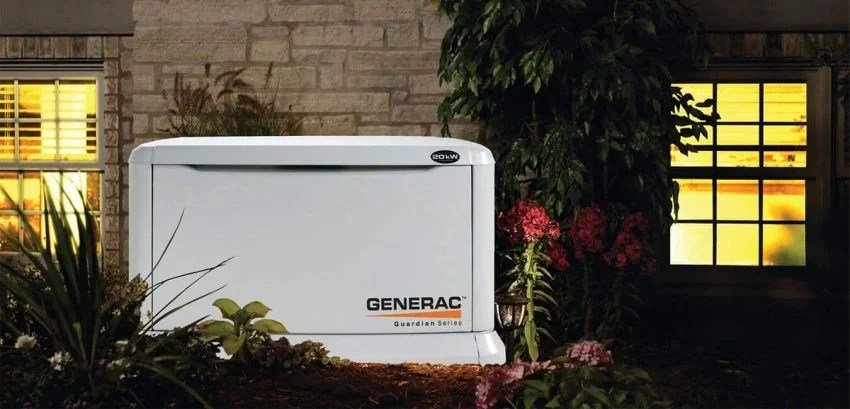
Few things offer peace of mind quite like reliable power, especially when the unexpected strikes. But choosing the right generator isn't a "one-size-fits-all" scenario. If you're looking to safeguard your home or business against extended outages, a 25kw generator often represents a powerful, comprehensive solution. This Sizing & Selection Guide for 25kw Generators will cut through the technical jargon, helping you understand precisely what a 25-kilowatt unit can do and how to pick the perfect one for your specific needs.
At a Glance: Your 25kW Generator Essentials
- 25kW generators are serious powerhouses. They typically provide comprehensive backup for large homes or small commercial operations, handling everything from central air conditioning to multiple major appliances.
- Don't guess your wattage. Calculating your specific power needs (running watts + highest starting watts) is non-negotiable for optimal performance and safety.
- Think standby, not portable. While large portables exist, 25kW generally points to a whole-home standby unit, requiring professional installation and a transfer switch.
- Safety is paramount. Never operate generators indoors, maintain proper clearances, and always use a professionally installed transfer switch.
- Fuel matters. Your choice of natural gas, propane, or diesel impacts run-time, cost, and availability.
Why 25kW? Powering Beyond the Basics
In the world of generators, 25 kilowatts (25,000 watts) isn't just a number; it's a statement. It means you're not just looking to keep a few lights on and charge your phone during an outage. You're aiming for continuity – to maintain a near-normal lifestyle at home or keep essential business operations humming when the grid goes dark.
Severe weather, from hurricanes and snowstorms to tornadoes, routinely causes widespread utility failures that can last hours, days, or even weeks. Beyond weather, equipment malfunctions or local incidents can also trigger unexpected outages. When these disruptions hit, daily tasks become a challenge, and critical systems like heating, cooling, refrigeration, and medical equipment can fail. A 25kW generator steps in to prevent these disruptions, offering a robust shield against uncertainty.
While smaller portable generators can handle basic needs like powering TVs, small appliances, and lights for camping or minor outages, and inverter generators offer quiet, lightweight power for tailgating or RVs, a 25kW unit typically falls into the realm of a whole-home (standby) generator. These are permanent power protection solutions, designed to run for extended periods on natural gas or liquid propane, automatically detecting outages and switching on within seconds. They are the most powerful, offer seamless operation, but also represent a significant investment requiring professional installation and maintenance. For many, the peace of mind they provide makes them an essential investment.
Demystifying the Kilowatt: Running vs. Starting Power
Understanding generator sizing boils down to two critical concepts: running watts and starting watts. Get this wrong, and you'll either underpower your home or overspend on unnecessary capacity.
- Running Watts (or Rated Watts): This is the continuous power an appliance needs to operate once it's already on. Think of it as the steady demand. Most appliances list their running wattage on a data plate or in the owner's manual.
- Starting Watts (or Surge Watts): Many appliances, especially those with electric motors (like refrigerators, air conditioners, well pumps, or power tools), require a brief burst of extra power to start up. This surge can be 2-3 times higher than their running wattage, lasting only for a second or two.
A generator must be able to handle both. It needs enough running watts to keep everything operating smoothly and enough starting watts to kick on the most demanding appliance in your lineup without tripping breakers or stalling.
Your Generator Sizing Blueprint: A Step-by-Step Approach for 25kW
Here's how to accurately calculate your power needs to ensure a 25kW generator is indeed the right fit, or if you need to adjust your expectations. This methodology, while often applied to portable generators, is crucial for any scale, especially for a whole-home unit.
List Your Essentials (and Your Comforts)
Go room by room, or system by system, and make a comprehensive list of every device you want to power concurrently during an outage. Don't forget things like:
- Major Appliances: Refrigerator, freezer, electric range, microwave, dishwasher, washing machine, dryer (if electric, this is a big one!).
- HVAC: Central air conditioning (this is often the single largest load), furnace blower, electric heat strips.
- Water Systems: Well pump, water heater, sump pump.
- Lighting: Essential indoor/outdoor lights.
- Electronics: Computers, TVs, internet modem/router, charging stations.
- Medical Equipment: CPAP machines, oxygen concentrators, specialized refrigeration.
- Other: Garage door opener, security system.
Tally Your Running Watts
For each item on your list, find its running wattage. This information is usually on a sticker or data plate on the appliance itself, or in its owner's manual. Sum all these individual running wattages to get your Total Running Watts.
- Example:
- Refrigerator: 800W
- Well Pump: 1,500W
- Central AC: 4,000W
- Lights & Electronics: 1,000W
- Water Heater: 4,500W
- Subtotal Running Watts: 11,800W
Identify the Heavy Hitter (Highest Starting Watts)
Now, go through your list again and identify the starting wattage for each device that has a motor. Then, pick the single device with the absolute highest starting wattage. You'll only account for one highest starting wattage at a time because a properly sized generator can handle the starting surge of one large appliance, then its running watts, and then the next large appliance as it cycles on.
- Example (continuing from above):
- Refrigerator: 800 running / 2,200 starting
- Well Pump: 1,500 running / 3,000 starting
- Central AC: 4,000 running / 12,000 starting (this is our highest!)
- Lights & Electronics: 1,000 running / N/A starting
- Water Heater: 4,500 running / N/A starting
- Highest Starting Watts: Central AC at 12,000W
Calculate Your Minimum Generator Requirement
Add your Total Running Watts (from step 2) to the Highest Starting Watts (from step 3). This sum represents the absolute minimum starting watts your generator needs to provide to power everything on your list.
- Example: 11,800 Running Watts + 12,000 Highest Starting Watts = 23,800 Watts Minimum Requirement.
In this example, a 25kW (25,000-watt) generator would be an excellent fit, providing enough headroom for the calculated needs. It’s always smart to have a buffer, typically adding 10-20% to your calculated minimum, to account for future needs or unexpected surges. This ensures your generator isn't constantly running at its maximum capacity, which can extend its lifespan. For more detailed insights into what makes these units tick, you can always learn more about 25kw generators.
What Can a 25kW Generator Actually Power? Real-World Scenarios
A 25kW generator is designed for serious tasks, well beyond the 10,100 watts typically needed for basic emergency power or smaller whole-home solutions. Here’s a look at its capabilities:
- Large Residential Whole-Home Backup: For a substantial home (2,500+ sq ft) with central air conditioning, electric water heater, well pump, electric stove, refrigerator, freezer, washing machine, dryer, and all your standard lights and electronics, a 25kW unit can comfortably power it all, often simultaneously. You won't have to ration power or choose which appliances to run.
- Small Commercial Operations: Many small businesses, like a doctor's office, a small restaurant (refrigeration, point-of-sale systems, limited kitchen equipment), a veterinary clinic, or even a small farm operation (milking machines, barn lights, well pumps), can rely on a 25kW generator to maintain critical functions during an outage, preventing significant financial losses.
- Specialized Needs: Properties with specific high-draw systems, such as advanced security systems, dedicated home server rooms, or extensive workshop tools, would also find a 25kW generator indispensable.
It's crucial to remember that while a 25kW generator is powerful, sizing must still be precise. An electrician specializing in generator installation can perform a detailed load calculation for your property, taking into account specific electrical codes and system configurations.
Fueling Your Choice: Natural Gas, Liquid Propane, or Diesel?
The fuel type significantly impacts the practicality and cost-effectiveness of your 25kW generator.
- Natural Gas:
- Pros: Unlimited run-time (as long as the gas supply isn't interrupted), no need for refueling, generally lower operating costs, cleaner burning.
- Cons: Requires a natural gas line connection, which can be costly to install if not already present, output can be slightly lower than propane or diesel models of the same size.
- Liquid Propane (LP):
- Pros: Clean burning, long shelf life for fuel, can be stored in tanks (above or underground), good for areas without natural gas lines.
- Cons: Fuel supply is finite (tank size dictates run-time), tanks need regular refilling, can be more expensive per gallon than natural gas.
- Diesel:
- Pros: Highly fuel-efficient, powerful, excellent for heavy-duty, continuous use, often preferred for commercial applications.
- Cons: Diesel fuel degrades over time (requiring stabilizers), louder operation, higher emissions, can be more expensive to install and maintain.
For whole-home 25kW standby generators, natural gas and liquid propane are the most common choices due to their convenience and ability to run for extended periods without manual refueling.
Beyond the Watts: Key Selection Criteria for Your 25kW Unit
Sizing is just the first step. Choosing the right 25kW generator also involves considering several other crucial factors:
Automatic Transfer Switch (ATS)
For a whole-home standby generator, an ATS is non-negotiable. It's the "brain" that monitors incoming utility power, detects an outage, signals the generator to start, and then safely transfers your home's electrical load to generator power. When utility power returns, it transfers the load back and shuts the generator down. This seamless, automatic operation is a primary benefit of a standby unit. Never attempt to plug a generator directly into a standard electrical wall outlet; always hire an electrician to install a transfer switch.
Noise Levels
A 25kW generator is a powerful machine, and with power comes some noise. Manufacturers provide decibel (dB) ratings, typically measured at 23 feet. While you won't find a silent 25kW generator, some models are significantly quieter than others due to advanced enclosures and engine design. If the generator will be close to your home or a neighbor's, noise level is a major consideration.
Durability and Enclosure
Since standby generators live outdoors, their enclosure must be robust enough to withstand the elements (rain, snow, extreme temperatures). Look for rust-resistant materials like aluminum or galvanized steel, and a powder-coat finish.
Brand Reputation and Warranty
Stick with reputable brands known for their reliability, customer service, and readily available parts. A strong warranty (e.g., 5-10 years) offers significant peace of mind for such a substantial investment.
Maintenance and Service Plans
Like any engine, a generator requires regular maintenance (oil changes, filter replacements, battery checks). Inquire about service plans offered by local dealers. Proactive maintenance is key to ensuring your generator performs flawlessly when you need it most.
Installation Considerations
A 25kW generator requires significant space, a concrete pad, proper clearances from your home and property lines, and connection to your fuel source and electrical system. This isn't a DIY project; professional installation by a licensed electrician and plumber is mandatory to comply with local codes and safety regulations.
Safety First: Non-Negotiable Rules for Generator Operation
No matter the size, generator safety is paramount. With a 25kW unit, the risks associated with improper use are magnified due to its power and fuel source.
- Read the Manual, Every Time: This seems basic, but every generator has specific operating instructions. Read them thoroughly before attempting to use or maintain your unit.
- Never Indoors. Seriously, Never. Generators produce carbon monoxide (CO), a colorless, odorless, and deadly gas. Operating a generator indoors—including garages, basements, sheds, or enclosed patios—can quickly lead to fatal CO poisoning.
- Maintain Safe Distance: Keep a minimum distance of 20 feet between a running generator and your home or any other building. Ensure exhaust is directed away from windows, doors, and vents to prevent CO from entering.
- Use a Transfer Switch: As mentioned, for whole-home standby units, an automatic transfer switch (ATS) is installed by a licensed electrician. This safely disconnects your home from the utility grid before connecting it to the generator, preventing dangerous backfeed that can injure utility workers and damage your home's electrical system. For portable units, use heavy-duty, outdoor-rated extension cords (properly sized for the load) to plug appliances directly into the generator, never into wall outlets.
- Avoid Overloading: Ensure your generator's wattage rating consistently matches or exceeds the total wattage of the connected appliances. Overloading can damage the generator and the appliances, and can be a fire hazard.
- Cool Before Refueling: If you have a gas-powered portable generator (less common for 25kW, but important general knowledge), allow it to cool down completely before refueling. Fuel spilled on a hot engine can ignite. Avoid overfilling the tank.
- Protect from Elements (Safely): Do not operate a generator in rain or snow unless it is within a covered, well-ventilated shelter specifically designed for generator use. Direct exposure to moisture can cause electrocution or damage the unit.
The Investment: What to Expect with a 25kW Generator
Investing in a 25kW generator is a significant decision, and it's helpful to understand the various costs involved:
- Unit Cost: The generator itself can range from $7,000 to $15,000+, depending on the brand, features (e.g., noise reduction, remote monitoring), and fuel type.
- Installation Costs: This is often a substantial portion of the total investment. Professional installation involves site preparation (concrete pad), electrical work (transfer switch, wiring), and fuel line connection. These costs can range from $3,000 to $10,000+, varying significantly based on local labor rates, complexity of the installation, and existing infrastructure.
- Fuel Costs: While natural gas is often the cheapest per therm, liquid propane requires purchasing and refilling tanks. Diesel can fluctuate based on market prices. Factor in your projected usage during outages.
- Maintenance: Annual servicing by a qualified technician is highly recommended, typically costing a few hundred dollars per year. This ensures longevity and peak performance.
While the upfront cost is considerable, the value of continuous power—protecting your property, preventing food spoilage, maintaining comfort, and ensuring safety—often far outweighs the investment for those who rely heavily on electricity or face frequent, prolonged outages.
Making the Final Decision: Your Next Steps
You've explored the power of 25kW, understood the critical difference between running and starting watts, and walked through the essential sizing steps. You've also considered fuel types, key selection criteria, and paramount safety protocols.
Now, it's time to act. Your next, most crucial step is to consult with a licensed and reputable generator dealer and electrician. They can:
- Conduct a professional load analysis: This will provide the most accurate assessment of your specific power requirements, accounting for your home's unique electrical setup.
- Advise on local codes and permits: They'll ensure your installation complies with all necessary regulations.
- Recommend the best generator for your needs: Based on their expertise, they can guide you to a model that balances performance, features, and budget.
- Provide a comprehensive quote: This will cover the unit, installation, and any necessary accessories.
Don't leave your power protection to chance. Arm yourself with this knowledge, take the initiative to assess your needs thoroughly, and partner with professionals to ensure your investment in a 25kW generator truly delivers the reliable, continuous power you deserve.